
Prism by Twenty1
Which of your ads
actually bring in jobs?
Your ads, your calls, your booked work.
Finally in the same conversation.
15 minutes. Real software. Your business.
Interactive demo · Fictional Summit Roofing · Sample data
Last 7 daysFour systems. None of them talking.
You’re spending twenty, thirty thousand a month. Your agency reports ten calls. Your front desk took thirty. Eight turned into jobs.
Which number is real? Nobody can tell you, because the ad platform, the website, the phone system and the booking software have never once talked to each other.
So the budget decision gets made on a hunch. Every month.
What this looks like in practice
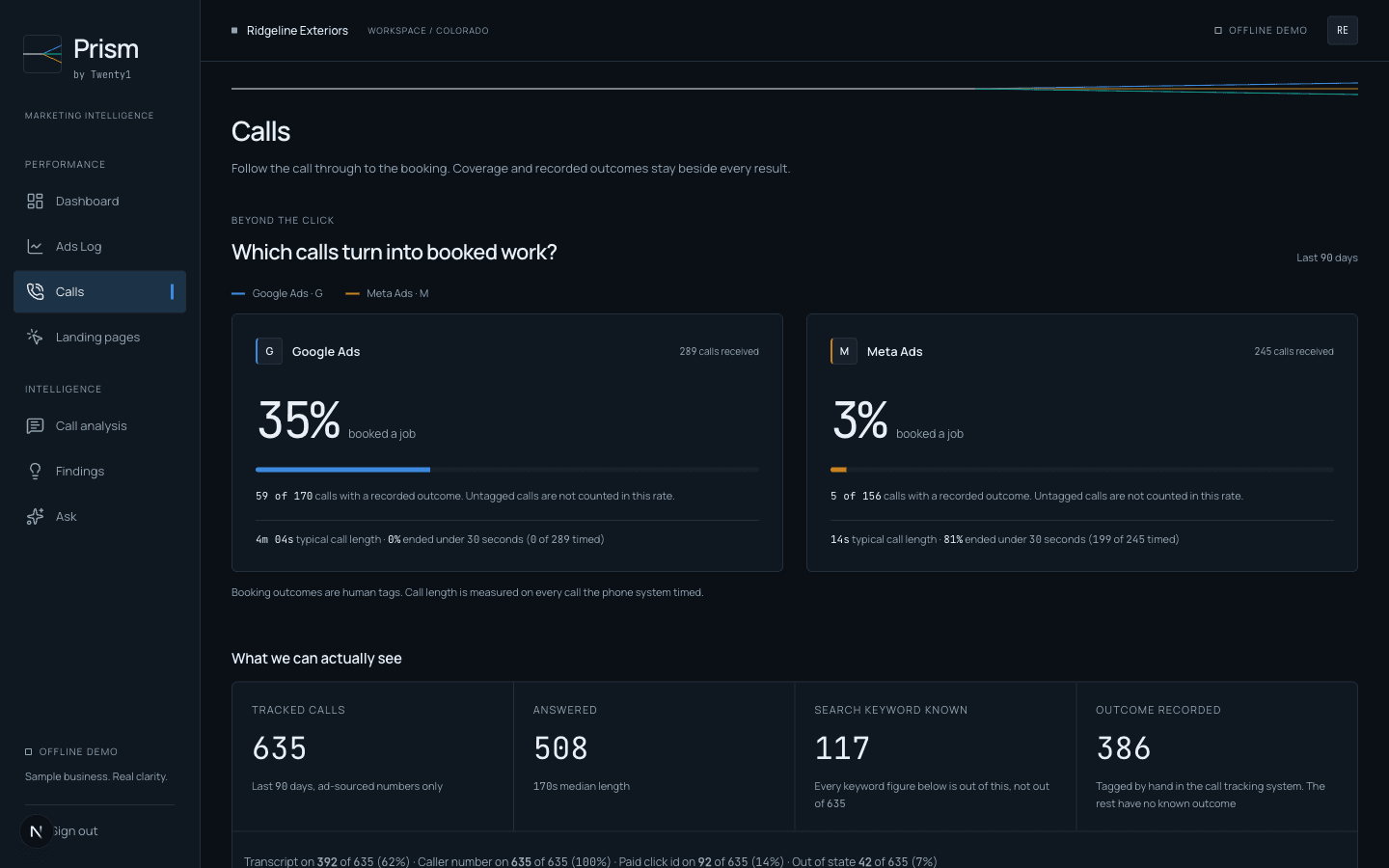
At one home-service company, the calls coming from Google ran almost four minutes. The calls coming from Facebook ran nine seconds.
The four-minute calls were real customers. The nine-second calls were hang-ups and wrong numbers. Every one of them was reported as a lead. Nobody saw it for months — it took putting the ad data and the call recordings side by side, which is the whole idea behind Prism.
One company’s result. Yours will look different — that is the point of looking.
The number you think you know.
Your ad account reports a return on what you spend. Look at what it is counting: form fills, clicks, phone calls — whatever got set up as a conversion once, probably years ago. Not jobs. Not money.
Prism counts the jobs you actually booked and the revenue that came with them, then works out the return on that. The two numbers are rarely close, and the gap is usually where the budget is going wrong.
It only works if your booking system or CRM holds the job. That is the first thing we check, before you pay for anything.
The screens you will actually open.
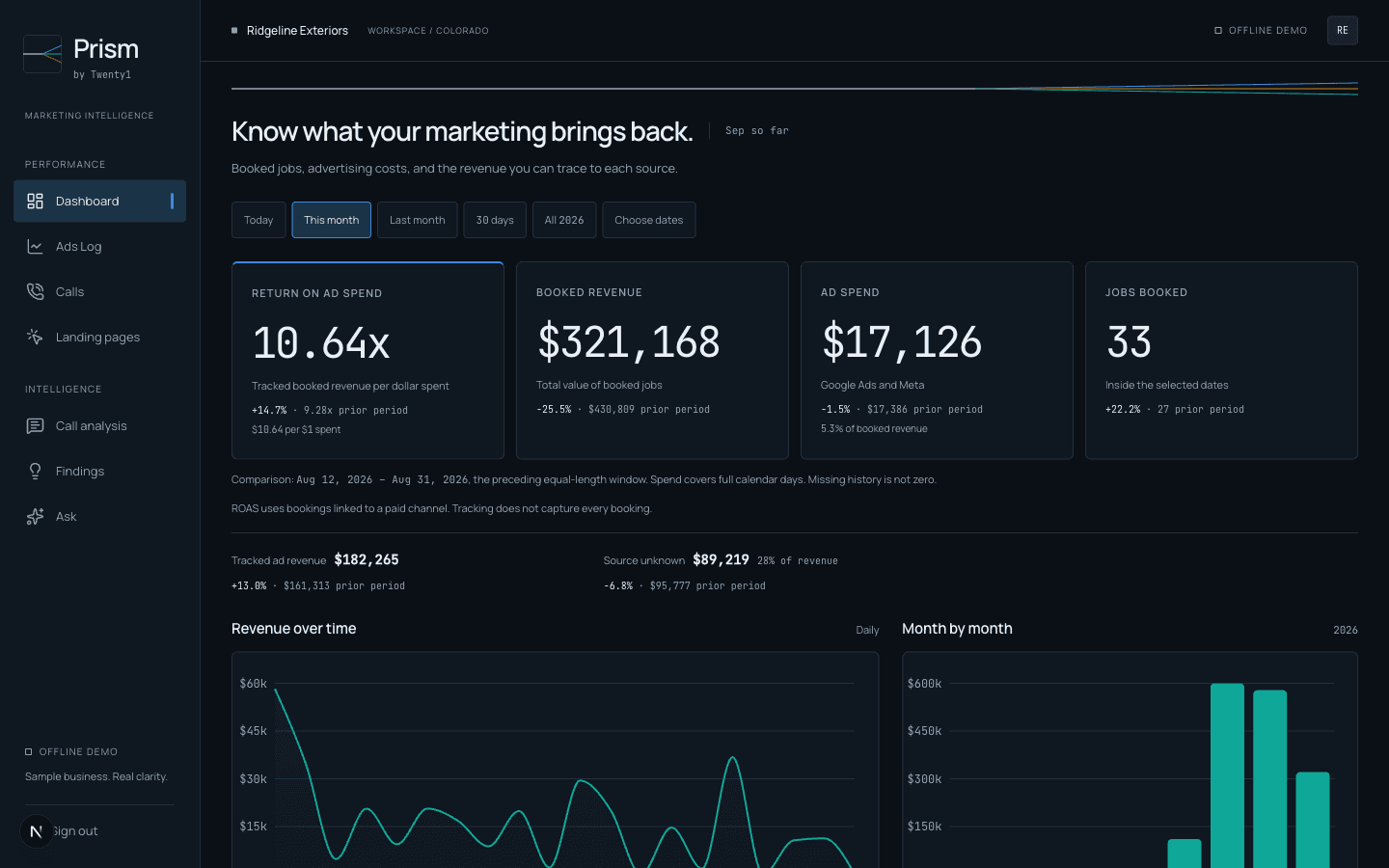
Where the money went, and what came back
Spend by channel next to booked revenue, with the previous period sitting beside every number. No metric appears without something to compare it to.
Which calls were worth taking
Every inbound call: how long it lasted, which ad it came from, and what was actually said. The short junk sorts itself out in about four seconds of looking. If your team already records in-home appointments, those go in the same place — the ad, the call, the kitchen table and the signed job, in one line.
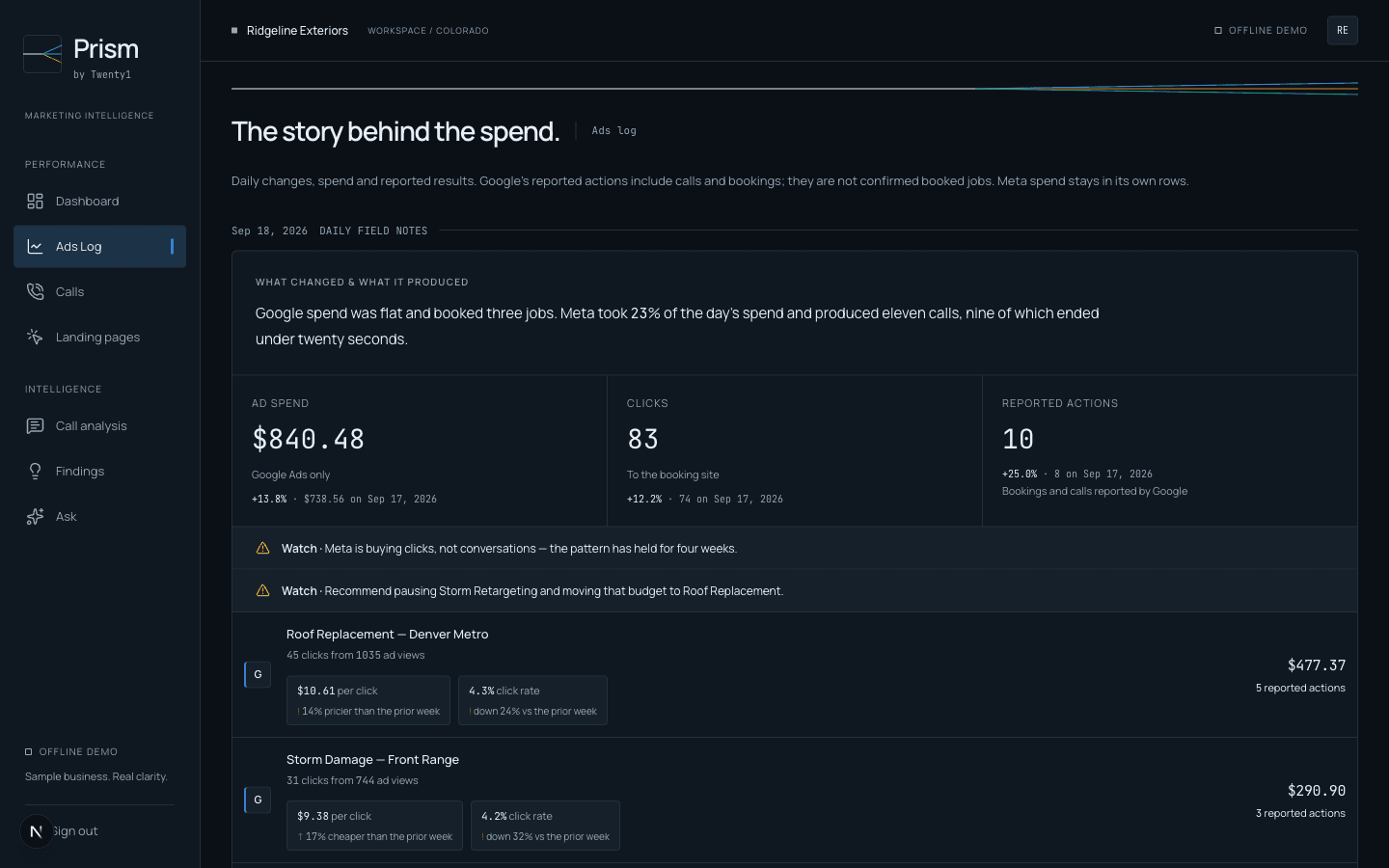
What your ads did this week, in English
A running record of what changed, what it cost, and what it produced. Written to be read by the owner, not by an ad buyer.
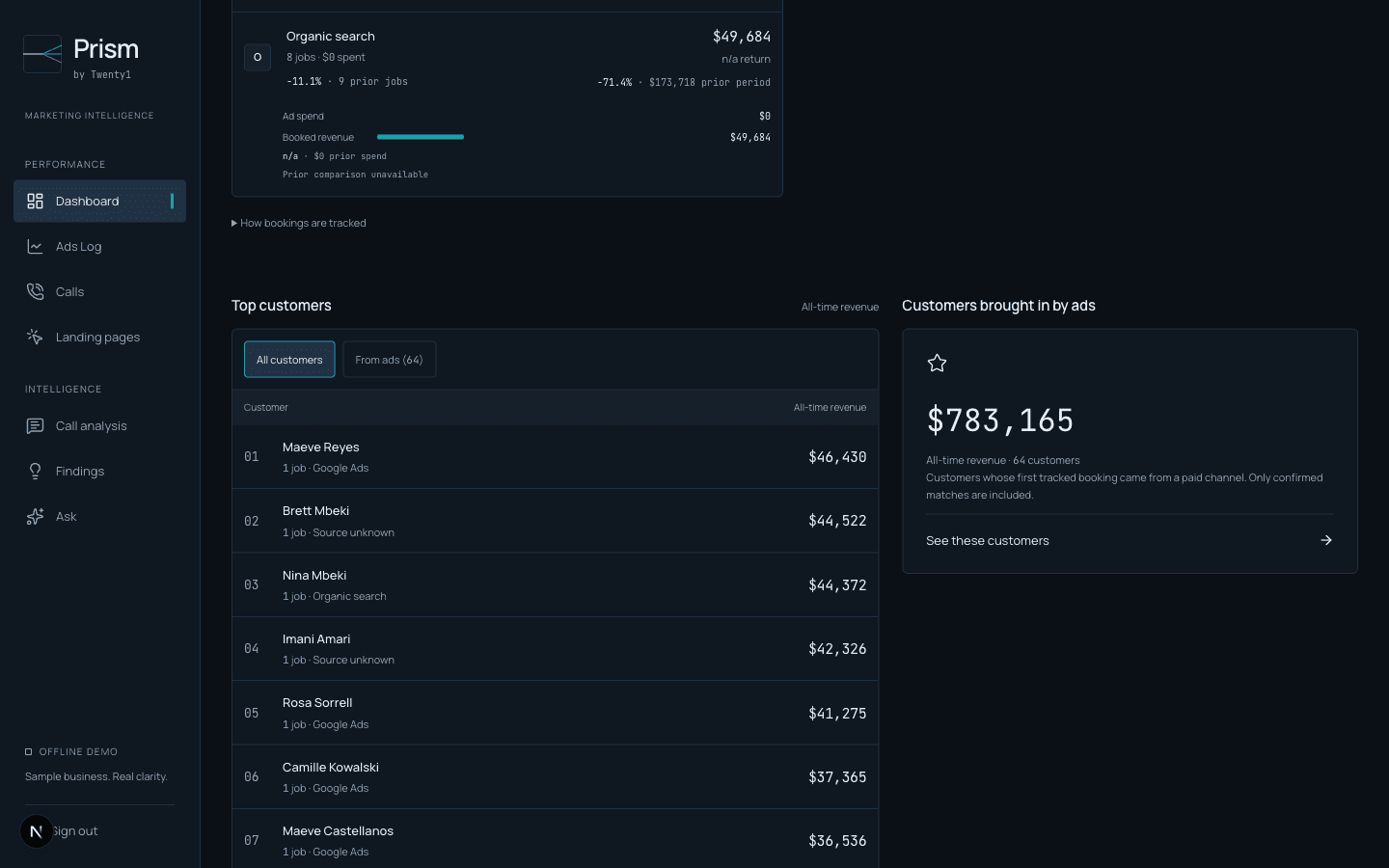
The ad that bought a customer keeps earning
When a customer comes back for the second job, the credit goes to whatever first brought them in — not to whichever channel happened to be running that month. The ad that looks expensive on its first sale often is not.
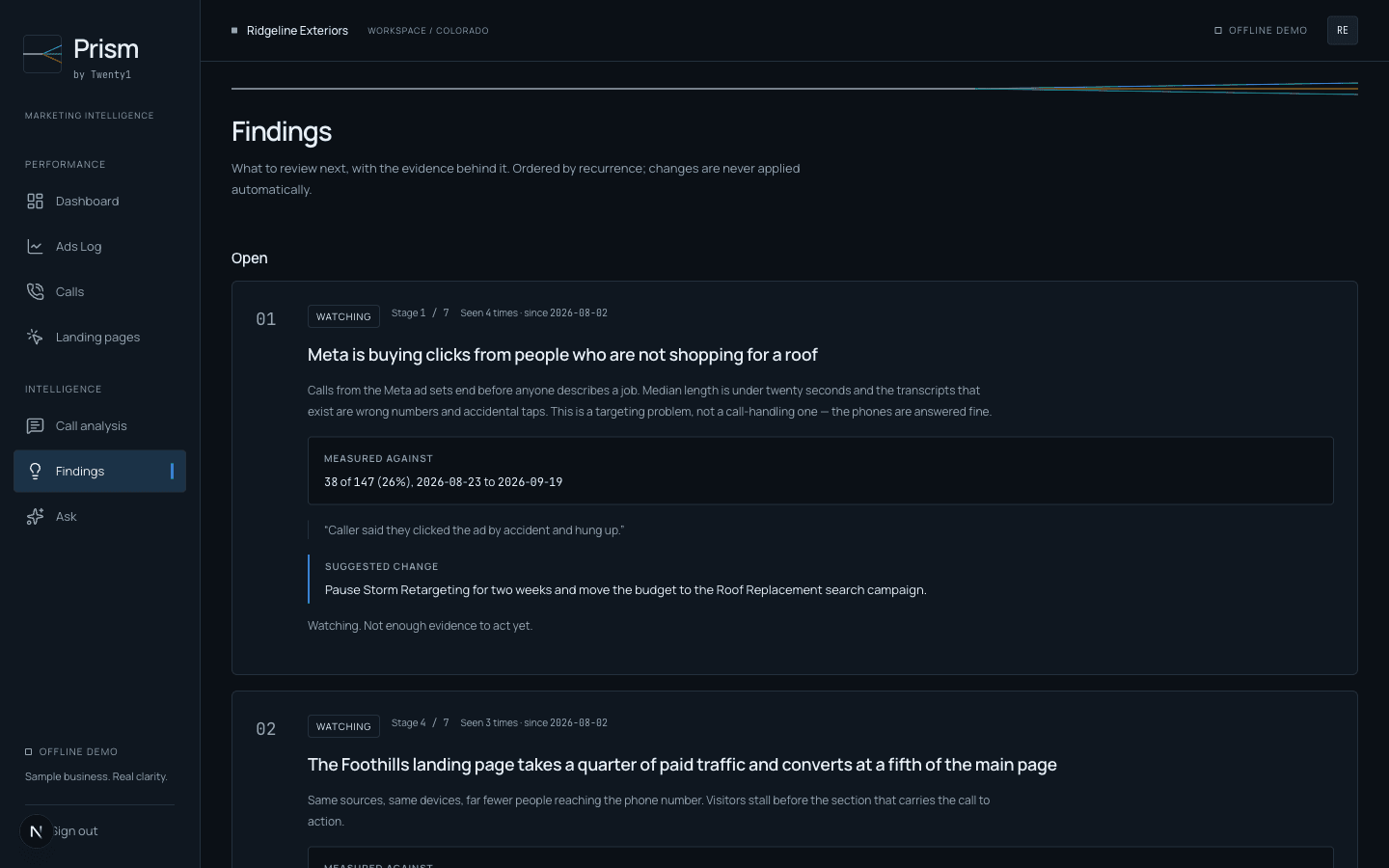
What to change, in order
A short list. Each one carries the reason and the numbers it was measured against, so you can argue with it.
The first two weeks.
Days 1–2
A call, then we map where your data lives today.
Days 3–7
We connect the ad accounts, the website, the phones and the booking system — then check every number against its source until they match.
Days 8–12
We set it up around your business: what counts as a good call here, what counts as a bad week.
Days 13–14
You get your first read: what your own numbers say, and the first thing worth changing.
Bring your last 90 days.
Fifteen minutes. You’ll see the software running, and we’ll look at what is knowable from the data you already have. If there’s nothing here for you, I’ll tell you.
Book the callPrism is built and run by Twenty1 Media.